When you’re finishing a basement, adding onto your home, or converting a room, most people focus on the fun stuff—flooring, paint, lighting, layout.
But here’s the reality: if the heating and air conditioning isn’t set up right, that new space won’t feel comfortable… no matter how nice it looks.
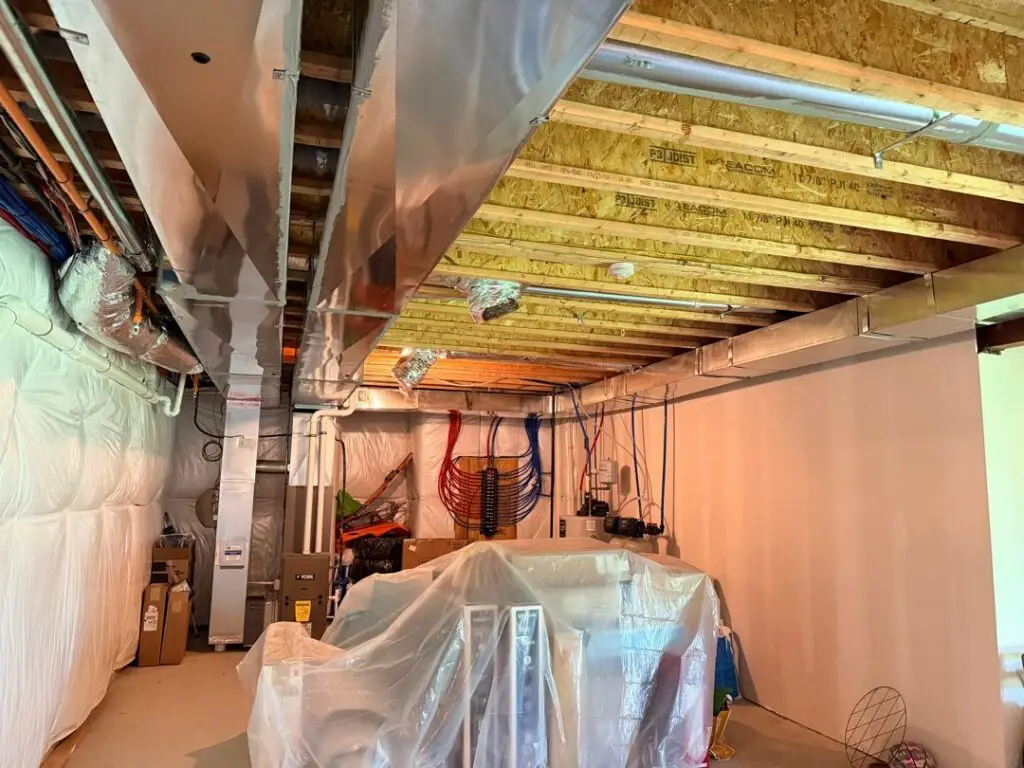
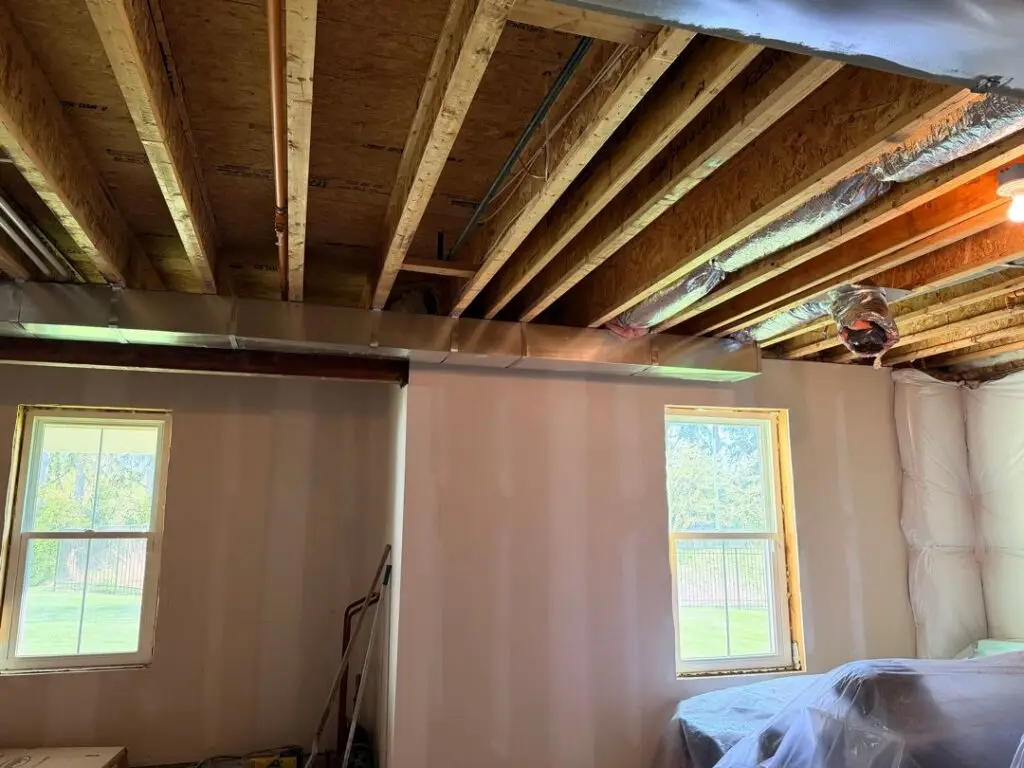
We recently worked on a basement finishing project in Upper Dublin Township where this came up. The homeowner needed ductwork added, returns installed, and airflow balanced so the space would actually feel like part of the home.
Their original HVAC company couldn’t get them on the schedule, so Rapid Air HVAC stepped in and had everything installed within a week of approval—and more importantly, done the right way.
Let’s walk through what actually matters when it comes to HVAC on these types of projects.
Can You Just Add Ductwork to an Existing System?
This is one of the most common questions we get:
“Can you just tap into my existing ductwork?”
Sometimes yes—but a lot of times, not without making changes.
Your current system was designed for a certain size home. When you:
- Finish a basement
- Add an addition
- Convert a garage or attic
…you’re increasing the amount of space it needs to heat and cool.
If you just add ductwork without checking the system, you can end up with:
- Weak airflow
- Rooms that never get comfortable
- The rest of the house losing airflow
That’s why proper duct design and system evaluation matters.
Adding Ductwork the Right Way
When we add ductwork to a home, it’s not just about running a few lines.
A proper job includes:
- Correct duct sizing (not too big, not too small)
- Balanced airflow so every room gets what it needs
- Strategic supply vent placement
- Adding return ducts so air can circulate properly
A lot of comfort issues come down to missing or undersized returns. If air can’t get back to the system, it doesn’t matter how many supply vents you add.
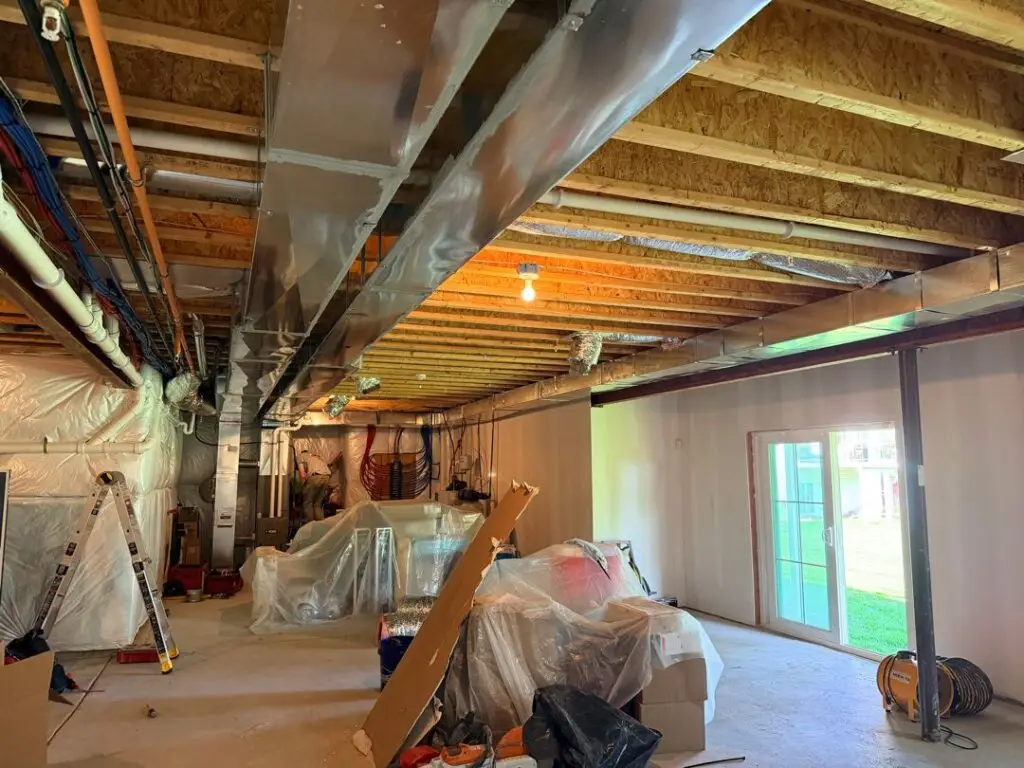
Do You Need to Add Returns When Finishing a Basement?
Short answer: yes, most of the time.
Returns are what pull air back into the system. Without them:
- Air gets stagnant
- Temperatures feel uneven
- Humidity builds up (especially in basements)
Adding returns is one of the most overlooked parts of basement HVAC work—and one of the most important.
Basement HVAC: Why It’s Different
Basements aren’t like the rest of the house.
They tend to be:
- Cooler naturally
- More humid
- More prone to airflow issues
That means you need to think about:
- Proper airflow (not just dumping heat down there)
- Moisture control
- Sealed and insulated ductwork
We also make sure everything is sealed with fire-rated materials where needed and fully code compliant, especially when running ductwork through finished spaces.
What If Your System Can’t Handle the Extra Space?
In some cases, your current system just isn’t big enough.
When that happens, you have a few options:
- Upgrade your existing system
- Add zoning
- Install a separate system (like a mini split)
We see this a lot with larger additions or full basement finishes.
Timing Matters (Especially With Contractors)
In the Upper Dublin Township project, the HVAC work was holding everything up.
Once we got involved:
- Estimate went out quickly
- Job was scheduled fast
- Work was completed in about a week
That helped the general contractor keep the entire project moving without delays.
Final Thoughts
If you’re planning to:
- Finish a basement
- Add onto your home
- Convert a garage or attic
…don’t wait until the last minute to think about HVAC.
Getting the ductwork, returns, and system design right is what makes the space actually livable.
Done right, it should feel like it was always part of the house.