If it felt like your air conditioner just couldn’t keep up during the recent 4th of July week heat wave, you’re definitely not alone.
Over the past week, our technicians responded to dozens of calls from homeowners throughout the Pottstown, Royersford, Phoenixville, Collegeville, Limerick, Spring City, and surrounding areas who all asked the same question:
“Why won’t my AC get below 76 degrees?”
The answer isn’t always that something is broken.
When outside temperatures climb into the upper 90s and even above 100°, with “feels like” temperatures pushing 110°, your air conditioning system is working harder than it will during almost any other week of the year.
Here are the most common reasons your AC struggled—and what you can do about them.
1. Your Air Filter Was Dirty
This is by far the easiest thing to overlook.
A dirty filter restricts airflow, which means your indoor coil can’t move enough air across it. Your system runs longer, uses more electricity, and cools your home less effectively.
During normal weather, a standard 1-inch filter might last 30-60 days depending on your home.
During a major heat wave? Thirty days is often pushing it.
If you have pets, construction dust, allergies, or a busy household, checking it every few weeks during the summer is a smart habit. A $15 filter can easily save a costly service call.
2. Your Capacitor Finally Gave Up
Think of the capacitor as the battery that helps start your outdoor unit.
Every time your air conditioner starts, the capacitor gets a workout.
During a heat wave, your system may start hundreds of times more than usual while running for much longer cycles.
Capacitors often fail on the hottest days because that’s when they’re under the greatest stress.
Some warning signs include:
- AC humming but not starting
- Outdoor fan not spinning
- Warm air coming from vents
- Breaker tripping
- System randomly shutting off
This is one of the most common repairs we perform during extreme summer weather.
3. You Have a Small Refrigerant Leak
Air conditioners don’t “use up” refrigerant. If it’s low, there’s usually a leak somewhere.
A tiny leak might not cause problems in May or early June.
But when temperatures soar, that same small leak suddenly becomes very noticeable.
Your system may:
- Run constantly
- Never reach the thermostat setting
- Blow cool—but not cold—air
- Freeze the indoor coil
- Lose cooling capacity during the hottest part of the afternoon
Finding and repairing the leak—not simply adding refrigerant—is the proper long-term solution.
4. You Set the Thermostat Too Low
This one surprises a lot of people.
When it’s 103° outside with a real-feel temperature over 110°, setting your thermostat from 72° down to 65° doesn’t make your AC cool any faster.
Air conditioners cool at roughly the same rate regardless of where the thermostat is set.
All you’ve really done is guarantee the system will run continuously.
Many properly functioning systems are designed to maintain approximately a 25-degree difference between indoor air returning to the system and the cooled air leaving the indoor coil.
On extremely hot days, it’s completely normal for your system to run almost nonstop. But you need to be realistic about the indoor temperature set point.
Instead of dropping the thermostat dramatically, try setting it to a realistic temperature like 74-78° and let the system work steadily.
5. You Closed Supply Vents Around the House
This seems like a smart way to push more air into certain rooms.
Unfortunately, it usually has the opposite effect.
Closing vents increases static pressure inside your ductwork.
That reduced airflow can lead to:
- Higher utility bills
- Frozen evaporator coils
- Less comfort
- Extra wear on your blower motor
- Shorter equipment life
Modern HVAC systems are designed with all of the supply vents open. If one room is consistently uncomfortable, there’s usually a better solution than shutting vents throughout the rest of the house.
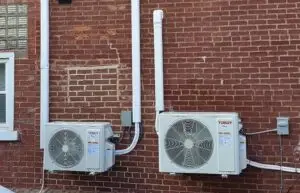
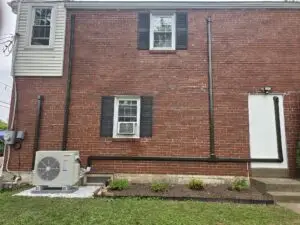
6. Your Outdoor Unit Couldn’t Breathe
Your outdoor condenser needs lots of airflow.
During the summer we often find units surrounded by:
- Tall grass
- Bushes
- Weeds
- Mulch piled against the cabinet
- Cottonwood fuzz
- Dryer lint
- Dirt and debris packed into the coil
When airflow is restricted, the system can’t get rid of heat efficiently.
That means higher operating pressures, reduced cooling capacity, and longer run times.
Keeping at least two to three feet of clearance around your outdoor unit can make a noticeable difference. Or call Rapid Air HVAC for a seasonal maintenance tune up.
7. Your System Is Simply Undersized—or Your Home Has Changed
Sometimes nothing is actually wrong with the equipment.
Over the years you’ve added:
- Better insulation…or maybe not.
- A finished basement.
- A home office.
- Larger windows.
- More people living in the home.
- A kitchen remodel with more appliances.
- An addition.
Meanwhile, your air conditioner is still the same size it was 20 years ago.
If your system barely kept up when it was installed, today’s hotter summers can expose those limitations.
A professional load calculation can determine whether your equipment is properly sized for your home’s current needs.
8. Deferred Maintenance Finally Caught Up
Many air conditioners seem to run “fine” year after year.
But small issues quietly build up. A dirty evaporator coil. A weak capacitor.
Electrical connections beginning to loosen. A contactor that’s becoming worn.
A blower wheel collecting dust. Low refrigerant that hasn’t quite become noticeable yet. Individually, these may not cause problems.
Combine several of them during the hottest week of the year, and suddenly your AC can’t keep up.
Annual maintenance catches these issues before they become emergency repairs.
So…Is It Normal That My AC Ran All Day?
Sometimes, yes. But your system needs a break as they are not designed to run constantly.
During an extreme heat wave, even a perfectly operating air conditioner may run for hours at a time.
What isn’t normal is:
- Warm air coming from the vents.
- Ice forming on the refrigerant lines.
- Constantly tripping breakers.
- Loud buzzing or humming.
- Indoor humidity climbing.
- The temperature continuing to rise inside the house.
Those are signs that your system probably needs professional attention.
A Few Tips Before the Next Heat Wave
- Change 1-inch filters every month during peak summer.
- Keep all supply vents open.
- Trim bushes and vegetation around the outdoor unit.
- Don’t wait until the hottest day of the year for maintenance.
- Have small refrigerant leaks repaired early.
- Avoid making dramatic thermostat changes.
- Schedule annual preventative maintenance before summer arrives.
The Bottom Line
Extreme heat pushes every air conditioning system to its limits.
Sometimes the problem is as simple as a dirty filter. Other times it’s a failing capacitor, a refrigerant leak, or years of deferred maintenance finally showing themselves.
The good news is that most of these issues are preventable with regular maintenance and a little preparation before the next heat wave rolls in.
If your system struggled this summer, don’t wait until the next stretch of 100-degree weather to find out why. Having it checked now can often prevent a much more expensive breakdown when you need it most.